About YYC Calgary Airport
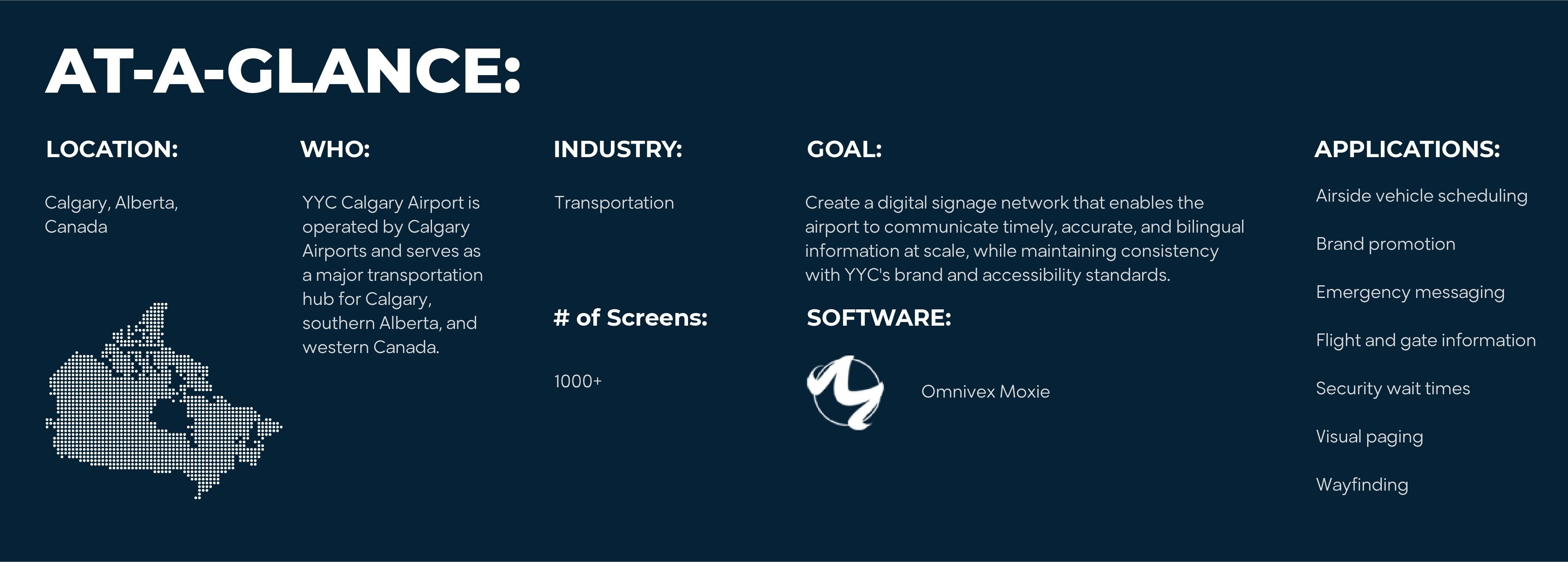
YYC Calgary Airport is operated by Calgary Airports and serves as a major transportation hub for Calgary, southern Alberta, and western Canada. It connects passengers to domestic, transborder, and international destinations and supports a broad ecosystem of airlines, government agencies, tenants, and service providers. A core focus of the organization is delivering a safe, efficient, accessible, and consistently branded guest experience across a large and evolving terminal environment.
The Scope
YYC operates in a complex, high‑traffic environment where passenger flows, operational conditions, and information needs change continuously. A digital signage network enables the airport to communicate timely, accurate, and bilingual information at scale, while maintaining consistency with YYC's brand and accessibility standards. The airport has several key objectives with its digital signage network:
- Improved navigation – Provide clear and consistent wayfinding in a large terminal with multiple concourses and frequent construction or operational changes.
- Accessibility - Ensure information is readable, well‑contrasted, bilingual (English and French), and adaptable to guests with diverse needs.
- Operational communications - Share important information, such as curbside, security, and terminal status messaging, where static signage cannot be updated quickly enough to reflect real‑time conditions.
- Brand consistency - Ensure that messaging across the terminal aligns with YYC’s visual identity, tone, and governance requirements.
The Solution
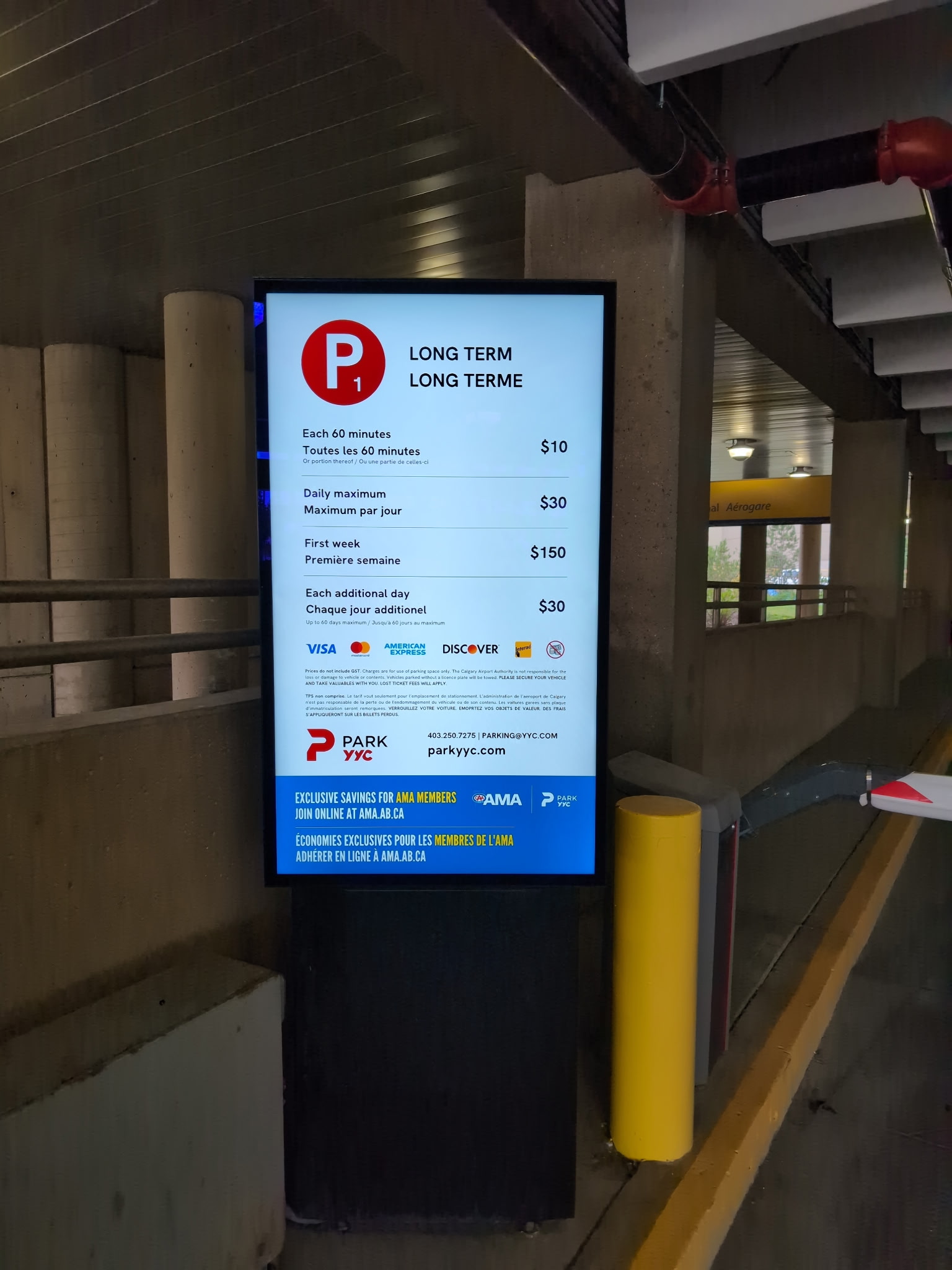
YYC uses Omnivex Moxie digital signage software to manage its network of screens across the airport. Their centralized digital signage communications platform delivers dynamic content to passengers, partners, and staff on approximately 1,000 screens. The screens are in various locations, including curbside, column wraps, desks, gates, FIDS, claims, bag halls, staff offices, security lines, and tenant areas.
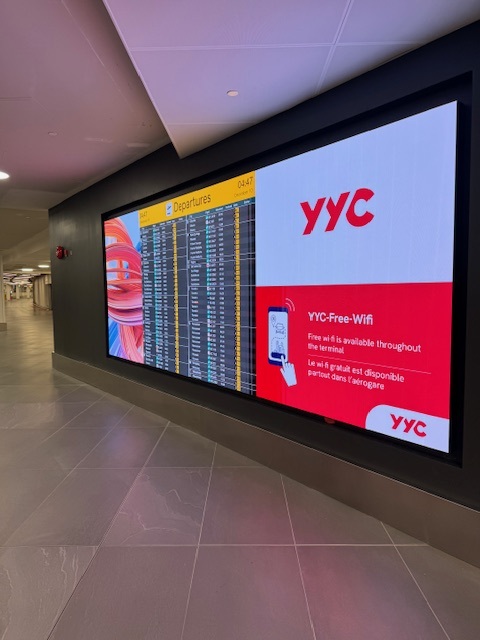
YYC is using its digital signage for a variety of applications, including:
- Flight information (arrivals and departures)
- Digital communications
- KPIs and dashboards
- Emergency messaging
- Visual paging
- Partnership advertising/highlights
- Wayfinding
- Security wait times
- Airside vehicle scheduling
- Brand promotion
- Accessibility
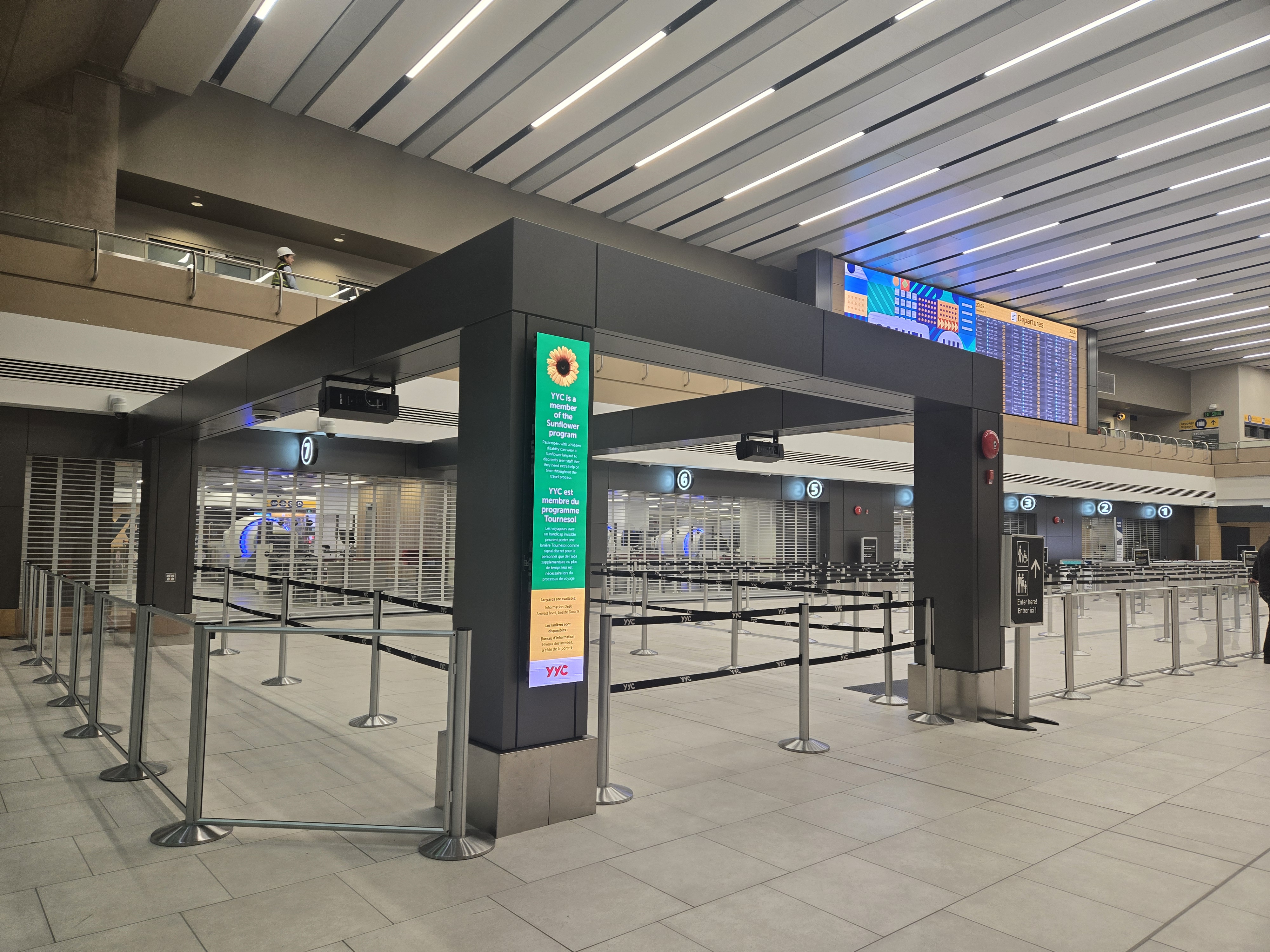
Content is reviewed and governed through established Terminal Operations and Communications processes to ensure compliance with signage policy, brand standards, and official languages obligations.
The Results
While YYC does not attribute a single quantified ROI figure solely to digital signage, partner and stakeholder feedback consistently highlights communication and customer experience as areas of relative strength for the organization. Digital signage is viewed internally as an enabling platform that supports these outcomes rather than a standalone revenue tool. Digital signage has enabled YYC to provide more consistent and timely passenger communications, reduce reliance on temporary or ad hoc physical signage, improve alignment with accessibility and official languages standards, and have greater flexibility in responding to operational changes.
Future plans include expanding digital signage coverage in high-impact locations as terminal needs change and integrating digital signage more closely with operational workflows and real-time information.