

When digital signage falls short, the issue is rarely the technology itself. More often, it begins with asking the wrong question: “What should we show on our screens?”
Screens are visible, so it makes sense to focus on what they show. Yet, focusing this way leads to the creation of playlists of images and videos that inform, but have little impact.
A better question, and one that separates successful organizations from the rest, is: What problems can our screens solve?
By answering this question, digital signage becomes a platform that empowers real improvement. Concentrating on outcomes ensures screens fit within daily routines, helping people make better decisions and avoid slowdowns.
From Content to Friction
When you focus on content, you tend to think about how it looks. However, when you focus on problems, you start to notice friction. And friction is everywhere.
In many organizations, especially those with frontline or distributed teams, communication and ultimately work can break down in small but costly ways. Employees without regular email access miss updates. Teams work with outdated information when systems aren’t connected in real time. Safety procedures are documented on signs and in manuals, but are not reinforced. Customers may wait longer than needed when communication is unclear or slow.
These are operational problems, not content issues. Sending more emails won’t solve these problems. Instead, organizations need to consider where employees spend time and where they're most likely to notice information throughout the day. It is in these locations, break rooms, elevators, and production floor, that sharing information on digital screens can have a real impact. Success should be measured by changes in awareness or behavior, rather than by email opens.
Screens are located in the right spots; they do more than inform, they ensure updates are seen, reduce missed messages, and empower faster decision-making.
Turning Screens into Operational Tools
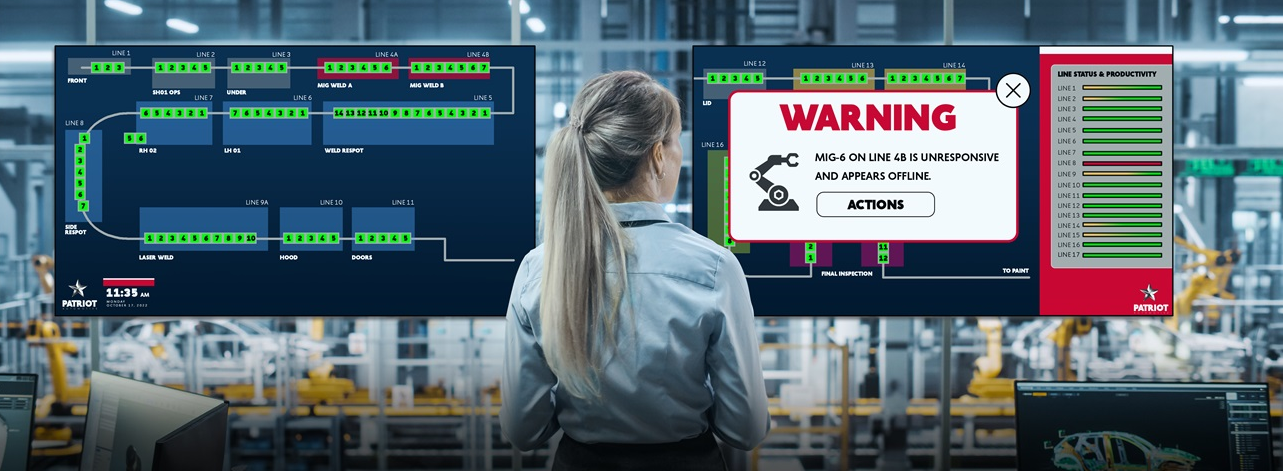
Most organizations have tools and software to track key processes and business areas. However, while the data exists, it often stays trapped in systems rather than being integrated into daily work. Focusing on “what should we show” will make you inclined to put dashboards or KPIs on screens. This isn’t a bad idea, but to fix problems like slow response times or missed targets, you need to rethink what “useful” really means. The answer likely isn’t more data; it’s getting the right information in front of the right person, at the right time.
When screens go beyond information sharing, they become essential tools that improve processes, support decisions, and deliver real benefits. Let’s consider a few examples:
Safety Communications: Safety information is generally shared through training sessions, printed materials, or static signs. But these methods aren't always effective. A content-first approach simply digitizes information, turning printed safety posters into slides and rotating reminders. While this changes the format, it does not always change the impact. Examining where and when safety incidents occur, and what information could help prevent them, leads to dynamic, context-aware messages—alerts for certain conditions, timely reminders, and visual cues at high-risk spots.
Customer experience: In industries such as healthcare, retail, or transportation, frustration often comes from uncertainty, not from actual delays. Not knowing what’s happening is generally worse than the wait itself. Leveraging screens to provide greater transparency to customers and teams reduces confusion, improves workflows, and enables staff to coordinate in real time—making the experience smoother overall.
None of these situations requires new technology; rather, just revisiting how you use the tools you have. When digital signage is part of your processes rather than just a display of content, it improves daily visibility, closes operational gaps, and helps teams stay in sync with real-time needs.
This approach also changes how you measure success. Move from focusing on outputs, such as how many screens are used, how often content is updated, and whether people are looking at outcomes, like:
- fewer safety incidents
- faster response times
- reduce perceived wait time
These metrics are harder to measure, but they show how digital signage adds value and justifies the investment.
It’s Time to Ask Better Questions
Thinking about "what problems can we solve" with your digital signage means asking better questions. It’s not about more screens or better design. Start by finding friction points: where do things slow down, break down, or get missed? Where are people using outdated information, or struggling to get what they need when they need it? Then ask how a screen, placed in the right spot and connected to the right data, could help. What information could reduce that friction? That’s when digital signage drives efficiency, supports decisions, and reduces breakdowns.